The internet depends on a structured addressing system that allows billions of devices to communicate smoothly across global networks. Every website, smartphone, server, and router uses an IP address to send and receive data. Sometimes users encounter unusual numeric patterns such as 164.68.1111.161, which may look like a real IPv4 address but actually violates core internet protocol standards. These types of invalid formats often appear in logs, misconfigured systems, or cybersecurity discussions, creating confusion for users who are not familiar with IP rules.

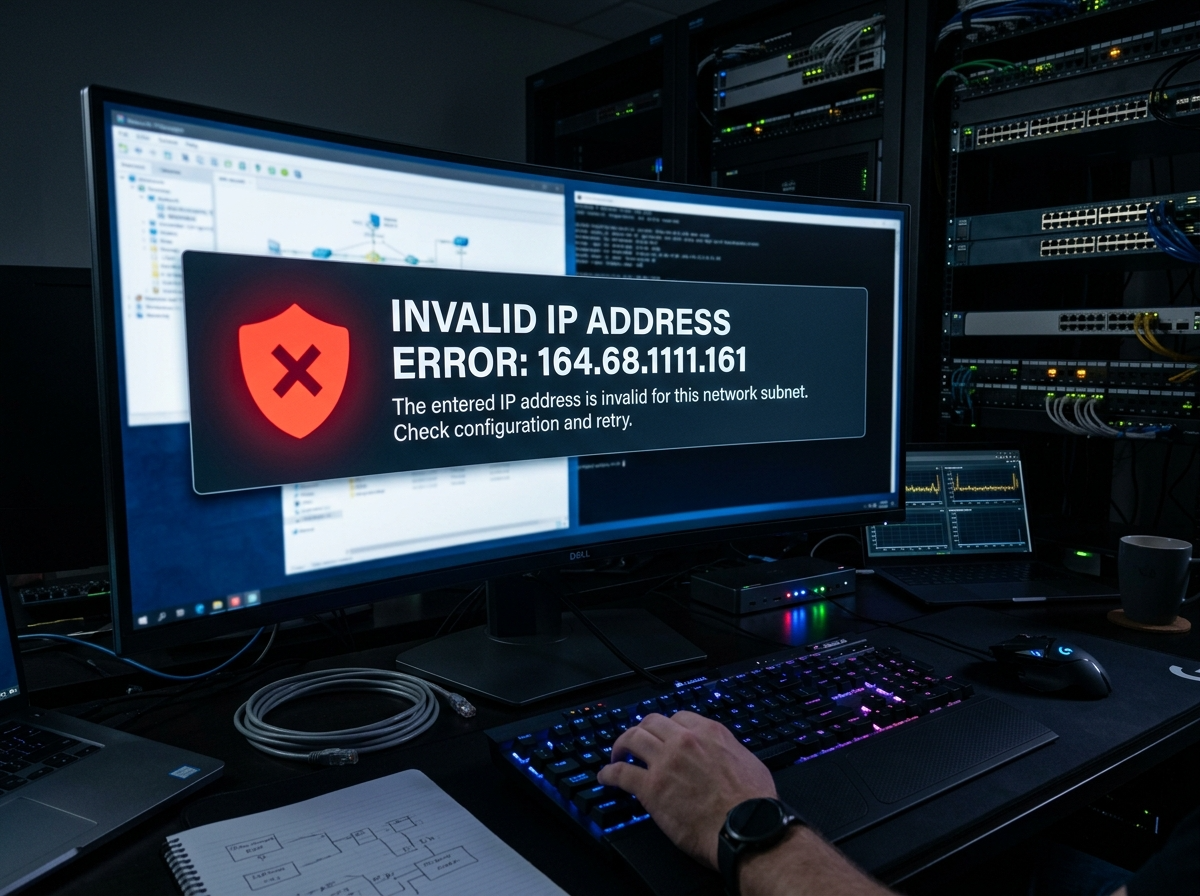
The address 164.68.1111.161 is not a valid IPv4 address because it breaks the fundamental structure required by internet networking systems. Although it follows the general dotted format, one segment exceeds the allowed numeric range, making it unusable 164.68.1111.161 for real-world communication. Understanding why this happens is important for network troubleshooting, cybersecurity awareness, and learning how modern internet infrastructure operates in real environments.
What Is an IP Address and Why It Matters in Digital Communication
An IP address is a numerical identifier assigned to devices connected to a computer network. It works like a digital location tag, ensuring that data packets reach the correct destination during internet communication. Every online activity, including browsing websites, sending messages, streaming videos, and accessing cloud services, depends on accurate IP-based routing.
According to networking principles, IP addresses serve two essential functions: identifying devices and defining their location within a network. Without this system, the internet would not be able to direct traffic properly, making communication between devices impossible.
In modern networking environments, IP addresses also play a critical role in cybersecurity, cloud computing, server hosting, and digital analytics. Businesses rely on IP tracking for detecting fraud, monitoring traffic, and securing online systems. This makes understanding IP formats an essential part of digital literacy today.
Why 164.68.1111.161 Is an Invalid IPv4 Address
The primary reason 164.68.1111.161 is invalid lies in the structure of IPv4 addressing rules. IPv4 addresses consist of four numerical segments called octets, and each octet must remain between 0 and 255. In this case, the third segment “1111” exceeds this limit, making the entire address invalid for networking use.
IPv4 is built on a 32-bit system, where each octet represents 8 bits of binary data. Since 8 bits can only support values up to 255, any number beyond that range cannot be converted into valid binary form. As a result, networking systems immediately reject such addresses during validation.
This strict limitation ensures consistency across global networks and prevents errors in routing, communication, and system configuration. Any deviation from this format, even by a single digit, renders the address unusable.
Structure of IPv4 Addresses in Real Networking Systems
IPv4 addresses follow a simple yet highly structured format that has been in use since the early development of the internet. A valid IPv4 address consists of four decimal numbers separated by dots, such as 192.168.1.1 or 8.8.8.8. Each segment represents one byte of information and must remain within the allowed range.
As explained in networking documentation, IPv4 was designed as a 32-bit system, allowing approximately 4.3 billion unique addresses. While this seemed sufficient in early internet development, the rapid growth of connected devices eventually led to address exhaustion and the development of IPv6.
Despite newer technologies, IPv4 remains widely used in routers, websites, hosting services, and enterprise systems. Its simplicity and compatibility ensure that it continues to play a major role in global internet infrastructure.
Common Reasons Invalid IP Addresses Appear in Systems
Invalid IP addresses like 164.68.1111.161 often appear due to simple human errors. When configuring routers, servers, or network settings manually, users may accidentally type extra digits or misplace numbers, resulting in invalid formatting.
System logs and software applications can also generate malformed IP addresses due to bugs or incorrect data handling. In some cases, corrupted network records or incomplete data processing may produce values that look like real IP addresses but do not follow official standards.
Another common reason is cybersecurity-related manipulation. Fake alerts, phishing emails, or misleading system warnings may include invalid IP addresses to confuse users or simulate technical legitimacy. This makes it important to understand proper IP structure when analyzing network data.
Difference Between Valid and Invalid IP Address Formats
A valid IPv4 address strictly follows the pattern of four numerical octets separated by dots. Each octet must remain between 0 and 255, ensuring compatibility with binary systems used in networking.
Invalid IP addresses break one or more of these rules, making them unusable in real-world communication. For example, numbers exceeding 255, missing segments, or incorrect formatting immediately disqualify an address from being functional.
Understanding this difference helps users identify errors in system configurations and avoid connectivity issues caused by incorrect IP entries. It also improves awareness when reviewing logs or troubleshooting network problems.
Role of IP Validation in Network Security Systems
IP validation is a critical part of modern cybersecurity and network management. Systems automatically check whether IP addresses follow correct formatting rules before allowing them to be processed. This prevents configuration errors and reduces the risk of network failures.
In cybersecurity environments, invalid IP detection can also help identify suspicious or manipulated data. Attackers may use fake or malformed IP addresses to disguise malicious activity or confuse monitoring systems. Proper validation helps security teams filter out such anomalies.
Modern firewalls, intrusion detection systems, and monitoring tools rely on IP validation to ensure that only legitimate traffic is processed. This improves system stability and strengthens overall network protection.
How Invalid IP Addresses Affect Network Performance
When invalid IP addresses are entered into network configurations, they can cause immediate disruptions. Devices may fail to connect to the internet, routers may reject settings, and applications may experience communication errors.
In business environments, invalid IP configurations can lead to more serious issues such as server downtime, failed deployments, and broken network services. Even a small formatting mistake can interrupt large-scale systems that depend on accurate routing.
For home users, incorrect IP entries often result in Wi-Fi connection failures or inability to access certain services. These issues highlight the importance of correct IP formatting in maintaining stable network performance.
Importance of Understanding IP Address Basics Today
As digital systems continue to expand, understanding IP addresses has become an essential skill for users, developers, and IT professionals. IP knowledge helps in troubleshooting, system configuration, and cybersecurity awareness.
Invalid IP addresses like 164.68.1111.161 serve as practical examples of how strict networking rules govern internet communication. They highlight the importance of correct formatting and validation in maintaining global connectivity.
With increasing reliance on online platforms, cloud services, and connected devices, basic IP literacy plays a key role in improving technical understanding and reducing network-related errors.
Conclusion
The address 164.68.1111.161 is not a valid IPv4 address because it violates the core rule that each octet must remain between 0 and 255. Although it appears similar to a standard IP format, the presence of an out-of-range value makes it unusable in real networking environments.
Understanding why this address is invalid helps users improve their knowledge of internet protocols, avoid configuration errors, and recognize issues in system logs or cybersecurity alerts. As the internet continues to evolve, learning the basics of 164.68.1111.161 IP structure remains essential for anyone working with digital systems or simply trying to understand how online communication works.