Introduction to 103.194170.154 and Its Internet Identity
The IP address 103.194170.154 is an IPv4 address used within the global internet infrastructure to identify and route network traffic between devices and servers. Every IP address acts as a digital identifier, and this particular address belongs to the 103.0.0.0/8 allocation block, which is commonly associated with internet service providers and hosting networks in the Asia-Pacific region.

In the modern internet ecosystem, IP addresses like 103.194.170.154 are essential for maintaining connectivity, ensuring that data packets reach the correct destination. Based on global IP allocation systems, addresses in this range are typically 103.194170.154 assigned by regional internet registries such as APNIC, which distributes IP resources across countries including Pakistan, India, Bangladesh, and other nearby regions. These allocations form the backbone of digital communication and online services.
Technical Structure and IPv4 Classification of 103.194170.154
The IP address 103.194.170.154 follows the IPv4 format, which consists of four numerical segments separated by dots. This structure allows approximately 4.3 billion unique addresses worldwide, making IPv4 the foundation of most internet communication systems despite the gradual transition toward IPv6.
IPv4 addresses are divided into classes and ranges, and the 103.x.x.x block is part of a large regional allocation used for commercial internet services. These addresses are often assigned to Internet Service Providers (ISPs), hosting companies, and enterprise networks. According to global networking standards, such IPs are routed using Border Gateway Protocol (BGP), which ensures that internet traffic finds the most efficient path across multiple networks and servers.
Geolocation Analysis and Regional Mapping of 103.194170.154
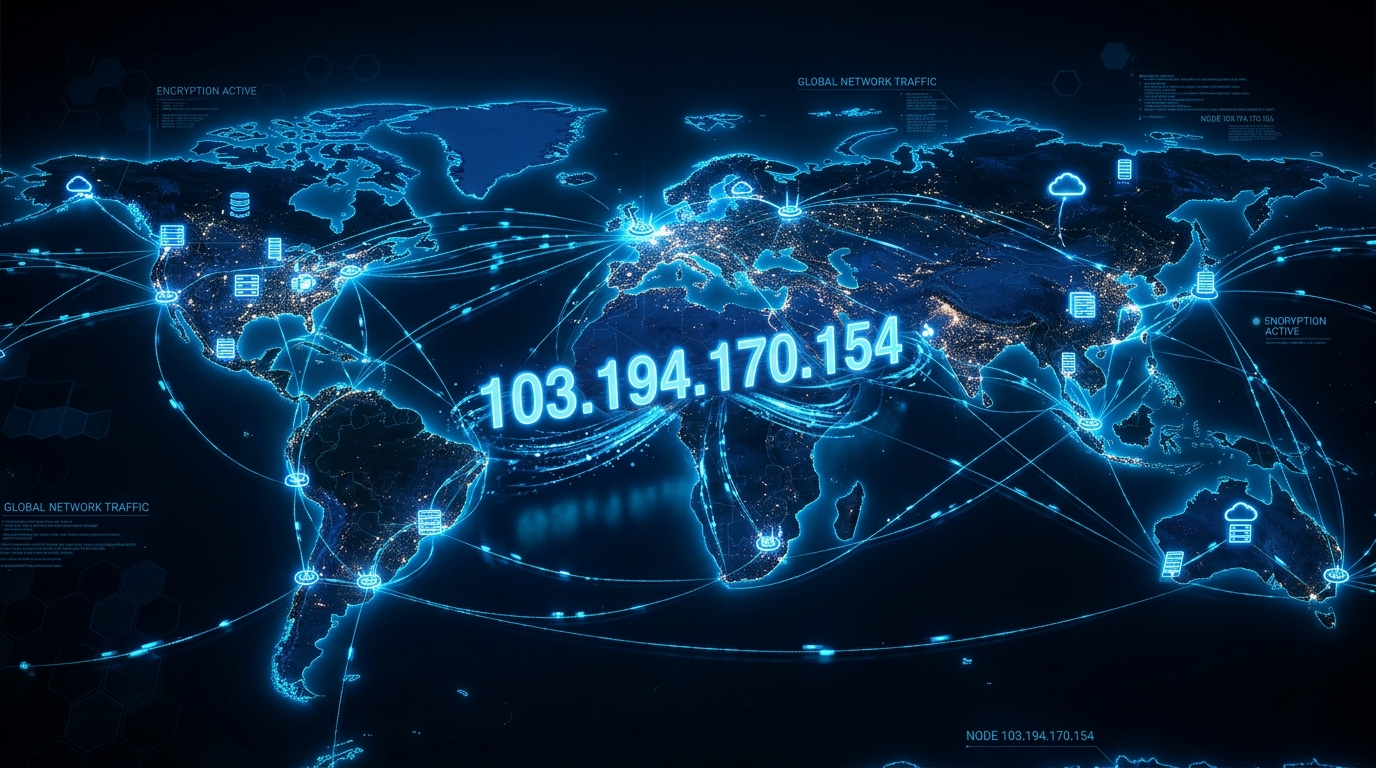
IP geolocation technology is used to estimate the physical location of an IP address based on registry data and network routing information. For 103.194170.154 , geolocation data typically places it within the Asia-Pacific region, with a high probability of assignment to South Asian network infrastructure.
However, it is important to understand that IP geolocation is not exact. Studies in IP intelligence show that country-level accuracy is generally high, while city-level accuracy can vary significantly depending on ISP infrastructure and routing behavior. Mobile networks, VPNs, and shared hosting environments can further reduce accuracy, meaning the IP location should always be treated as an approximation rather than a precise physical address.
ISP Ownership, ASN Details, and Network Assignment
Every IP address is part of a larger Autonomous System Network (ASN), which represents the organization controlling a range of IPs. The IP 103.194.170.154 is most likely assigned to an ISP or hosting provider operating under a regional ASN in South Asia.
ISPs manage large blocks of IP addresses and allocate them dynamically or statically to users, servers, and business clients. Hosting providers often use such IPs for websites, cloud services, and application servers. This means that a single IP address can represent multiple users over time, depending on how the provider rotates or assigns network resources.
Security Reputation and Threat Intelligence Considerations
In cybersecurity systems, every IP address is evaluated for its reputation score based on historical activity. The IP 103.194.170.154, like many ISP-assigned addresses, may not have a fixed reputation and can change depending on usage patterns.
Modern threat intelligence platforms analyze IP behavior for signs of spam, malware distribution, or suspicious traffic. However, reputation data is dynamic and not permanent. If an IP was previously used for malicious activity, it may appear flagged in databases, even if current usage is completely legitimate. This is why security analysts cross-check multiple sources before making conclusions about any IP.
Role of 103.194.170.154 in Internet Routing and Data Transmission
The primary function of an IP address like 103.194170.154 is to facilitate data routing across the internet. When a user accesses a website, data packets travel through multiple routers and networks before reaching their destination, and IP addresses act as directional markers in this process.
Routing is managed through protocols like BGP, which connects different autonomous systems globally. Without IP addresses such as 103.194.170.154, it would be impossible for servers and devices to communicate efficiently. This system ensures that emails, websites, video streams, and online applications function smoothly across continents.
Privacy, Legal Boundaries, and Data Limitations of IP Tracking
Although IP addresses can provide approximate location and network details, they do not directly reveal personal identity. An IP address only identifies a connection point, not the individual behind it.
Internet service providers are responsible for mapping IP addresses to customer accounts, and this information is protected under privacy laws in most jurisdictions. Access to personal data associated with an IP requires legal authorization. Therefore, IP tracking is mainly used for cybersecurity, analytics, and network diagnostics rather than personal identification.
Common Use Cases of IP Range 103.194170.154 in Digital Infrastructure
IP addresses within the 103.194.x.x range are frequently used in web hosting, enterprise networking, and broadband internet services. These addresses support a wide range of digital operations including website hosting, email servers, cloud computing, and internal business systems.
Organizations rely on such IP allocations to maintain stable and scalable online services. Hosting providers use these IPs to ensure global accessibility and consistent uptime for applications and websites, making them a critical part of modern digital infrastructure.
Cybersecurity Monitoring, Abuse Detection, and IP Intelligence Systems
Cybersecurity platforms continuously monitor IP addresses like 103.194170.154 for abnormal or malicious activity. These systems use machine learning and threat intelligence databases to detect spam, brute-force attacks, or botnet behavior.
If an IP shows suspicious activity, it may be temporarily flagged or restricted. Abuse reporting systems allow users and organizations to report harmful behavior associated with specific IP addresses. ISPs then investigate these reports and take corrective action if necessary, ensuring network integrity and reducing cyber threats across the internet ecosystem.
Conclusion: Understanding the Digital Role of 103.194.170.154
The IP address 103.194170.154 is part of the global IPv4 infrastructure that powers modern internet communication. It is typically associated with ISP or hosting networks in the Asia-Pacific region and plays a vital role in routing, connectivity, and data exchange across the internet.
While IP addresses can provide useful technical insights such as geolocation, ASN ownership, and network classification, they do not reveal personal identity. Instead, they function as essential building blocks of the internet, enabling secure and efficient 103.194170.154 communication between billions of devices worldwide. Understanding IPs like 103.194.170.154 helps improve awareness of how digital systems operate behind the scenes and how global connectivity is maintained.