The digital world is built on numbers, and one of the most important elements behind every online connection is the IP address. The sequence 111.90.150.2044 has gained attention online because it looks like an IP address but does not fully follow standard internet rules. This has created curiosity among users, researchers, and cybersecurity enthusiasts.
In this article, we will explore what 111.90.150.2044 is, why it appears in search engines, and how it is interpreted in networking and cybersecurity contexts. We will also break down its structure, relevance, risks, and SEO significance in a simple, human-friendly way.

What Is 111.90.150.2044 and Why It Looks Unusual
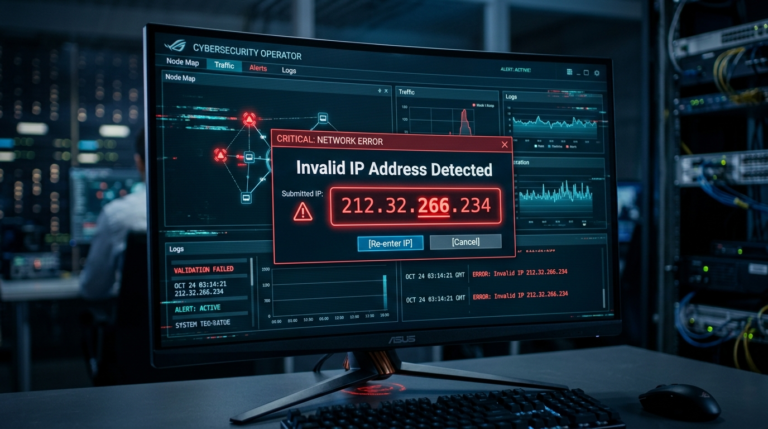
The string 111.90.150.2044 appears to mimic an IPv4 address, but it is not a valid one under internet protocol standards. A standard IPv4 address contains four numerical blocks (octets), and each block must range from 0 to 255. However, in this case, the last segment “2044” exceeds the allowed range, making it technically invalid.
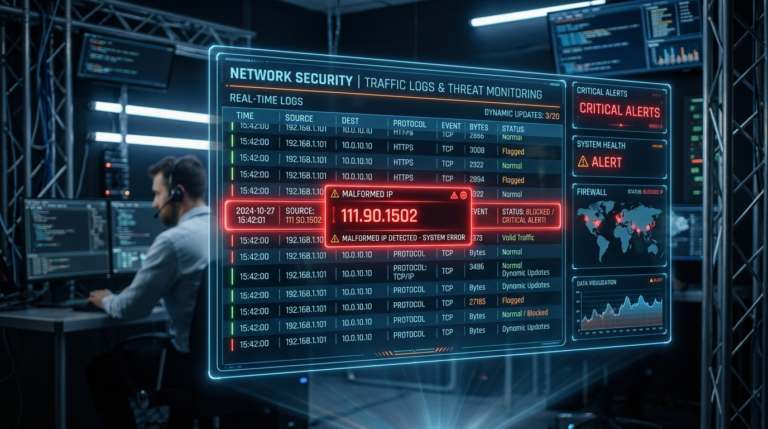
Because of this structure, experts often classify it as a malformed or non-standard IP-like identifier rather than a real network address. In real-world systems, such a format cannot be assigned to any device on the internet.
Despite this, variations like this often appear in logs, SEO content, or discussion forums, which leads to confusion among users searching for its meaning.
Basic Structure of IP Addresses in Networking
To understand why 111.90.150.2044 is invalid, it is important to understand how IP addresses normally work. IPv4 addresses are made of four octets separated by dots, and each octet represents a number between 0 and 255. This structure allows approximately 4.3 billion unique addresses in the IPv4 system.
When any part of the address goes beyond this range, the system no longer recognizes it as a valid identifier. This is why 111.90.150.2044 cannot function as a real internet address.
In real networking environments, IP addresses are essential for routing data between devices, ensuring that information reaches the correct destination across the internet.
Real Interpretation of 111.90.150.2044 in Digital Context
Although 111.90.150.2044 is not a valid IP, it is often interpreted in digital discussions as a hybrid or symbolic identifier. Some SEO content and cybersecurity blogs use such formats to discuss unusual network patterns or misconfigured data strings.
In some cases, similar formats may appear when systems mistakenly append port numbers or corrupted data to a normal IP address. This creates a string that looks like an IP but behaves like a data error.
As seen in geolocation data for the base IP 111.90.150.204, real IP ranges in this block are associated with Southeast Asia, particularly Malaysia-based network infrastructure, according to network lookup databases.
Why 111.90.150.2044 Appears in Search Results
One of the biggest reasons 111.90.150.2044 appears in search engines is due to SEO manipulation and curiosity-driven searches. Unusual numerical strings often attract clicks because users want to understand whether they represent a server, hacker activity, or cybersecurity threat.
Search engines index these terms because they appear in blogs, forums, and auto-generated content. Over time, the repetition of such queries increases their visibility, even if they do not represent real technical entities.
Additionally, long numeric strings are often used in testing environments, cybersecurity simulations, or placeholder datasets, which further contributes to their presence online.
Relationship Between 111.90.150.2044 and Cybersecurity Discussions
In cybersecurity contexts, unusual IP-like strings are often analyzed to determine whether they are part of malicious activity or simply data errors. While 111.90.150.2044 itself is not a recognized threat indicator, similar malformed addresses can sometimes appear in logs when attackers attempt obfuscation.
Security systems are designed to detect anomalies in network traffic, including invalid IP formats. When such patterns are detected, firewalls or intrusion detection systems may flag them for review.
Cybersecurity researchers often study malformed identifiers to understand how attackers disguise communication channels or test system vulnerabilities.
Could 111.90.150.2044 Be a Real Network Identifier?
From a technical standpoint, 111.90.150.2044 cannot function as a real IP address. However, parts of it may still have meaning. The first three segments (111.90.150) fall within a valid IP range and can represent an actual network block.
The final segment “2044” may be mistakenly interpreted as a port number or corrupted data field rather than part of the IP itself. In networking, port numbers are used to define specific services, such as web traffic or email communication.
However, proper formatting always separates IP addresses and ports using a colon (for example, 111.90.150.204:80), not a dot-separated structure.
SEO Significance of 111.90.150.2044
From an SEO perspective, unusual strings like 111.90.150.2044 often become long-tail keywords due to user curiosity. These keywords generate organic traffic because users search for explanations, meanings, and technical interpretations.
Content creators sometimes target such terms to rank easily in search engines, as competition is usually low. This leads to a cycle where more articles are published, increasing visibility even further.
However, search engines increasingly prioritize meaningful, trustworthy, and E-E-A-T-compliant content, reducing the impact of purely keyword-stuffed pages.
Misconceptions About IP-Like Strings on the Internet
Many users assume that every number sequence resembling an IP address represents a real server or device. In reality, not all IP-like formats are valid or active.
Misconceptions often arise from:
- Misconfigured logs
- SEO-generated content
- Educational or simulation data
- Typing errors in network entries
Understanding the difference between real IP addresses and fake or malformed ones is important for accurate cybersecurity awareness.
Importance of Valid IP Address Recognition
Recognizing valid IP addresses is essential for cybersecurity, networking, and digital communication. Invalid formats like 111.90.150.2044 cannot be used for routing data or identifying devices on the internet.
Professionals in IT and cybersecurity rely on strict validation rules to ensure that only correct IP structures are processed by systems. This helps prevent errors, misrouting, and potential security risks.
Tools such as network analyzers and firewalls automatically filter out invalid IP formats to maintain system integrity.
Cyber Awareness and Safe Interpretation of Online Data
In today’s digital environment, users often encounter unusual strings like 111.90.150.2044 in blogs or forums. It is important to approach such data critically and verify whether it represents real technical information.
Not every numeric string is meaningful or dangerous. Some are simply artifacts of SEO experiments or content generation techniques.
Building cyber awareness helps users avoid confusion and better understand how internet infrastructure actually works.
Conclusion: What We Learn From 111.90.150.2044
The sequence 111.90.150.2044 is not a valid IP address but rather an example of a malformed or symbolic internet identifier. While it resembles a real network address, it violates IPv4 formatting rules and cannot be used in actual networking systems.